El Diablo of Timanfaya: The Fiery Symbol of Lanzarote’s Soul
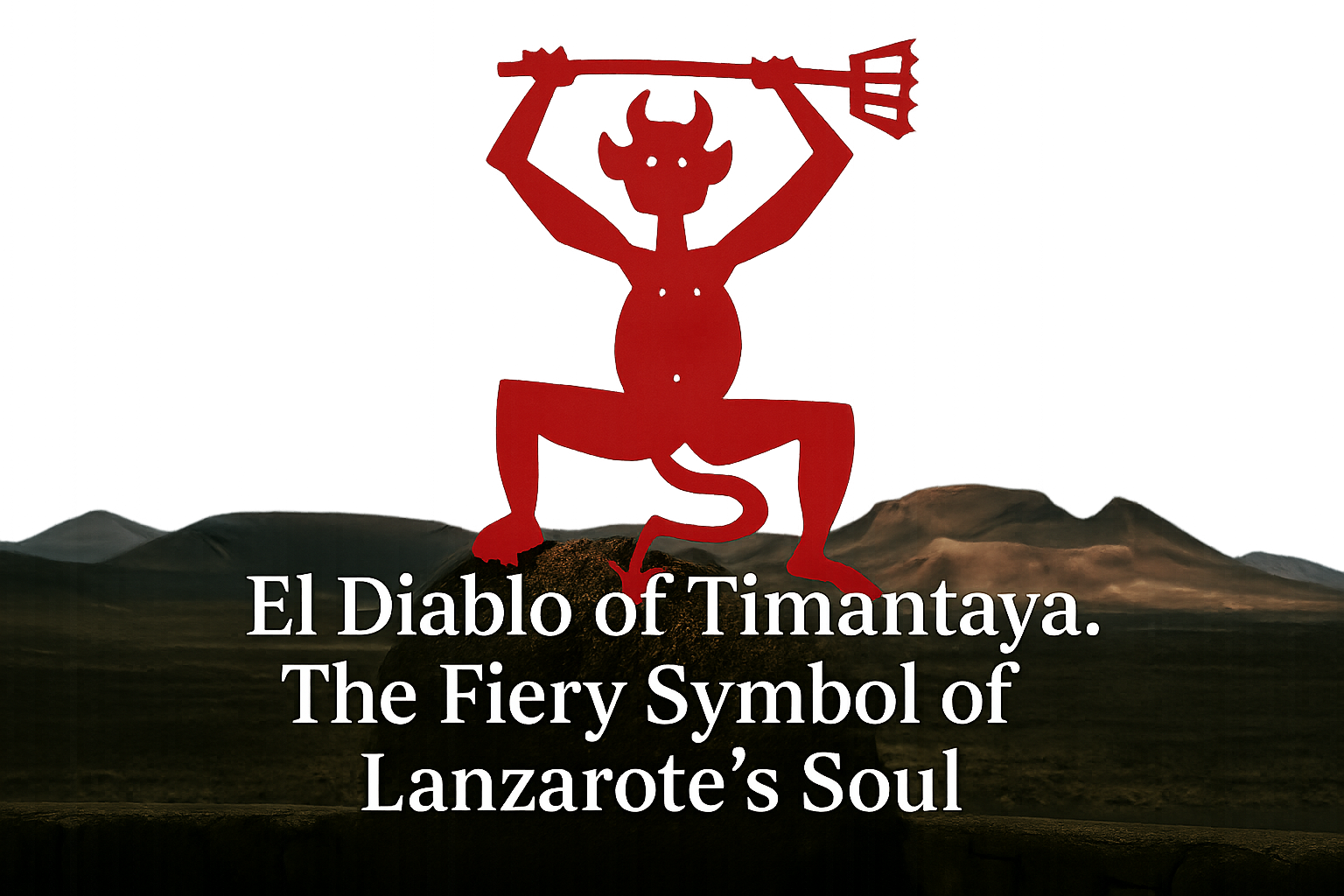
Every island has its legends, its mascots, its symbols that capture its essence. For Lanzarote, that symbol is undeniably El Diablo, the iconic devil perched atop the restaurant at Timanfaya National Park. More than just a quirky weather vane, El Diablo is a powerful representation of the island’s fiery heart, its resilience, and the creative genius of César Manrique.
At Lanzawear, we see El Diablo not as a figure of fear, but as a bold emblem of untamed power and uncompromising spirit – a perfect fit for the island and for our brand philosophy. It embodies the volcanic energy that runs deep beneath our feet and the audacity to thrive in seemingly impossible conditions.
The Birth of a Symbol: Beyond a Simple Sketch The story of El Diablo begins, as so many great stories on Lanzarote do, with César Manrique. In the late 1960s, as plans were being made to develop the Timanfaya National Park into a unique tourist attraction, Manrique was tasked with designing the restaurant, “El Diablo,” situated directly above a volcanic vent. He needed a symbol that would capture the raw, geothermal energy of the place without resorting to literal or cliché imagery.
His initial sketches, created on the back of a napkin (as legend has it), sought to embody the “demonic” power of the volcanoes that erupted for six years in the 18th century. Manrique envisioned a figure that was both playful and imposing, abstract yet immediately recognizable. The final design, brought to life by Jesús Soto, Manrique’s close collaborator and the visionary behind many of his kinetic sculptures, is a masterpiece of minimalist modern art.
The figure itself is striking: a stylized, almost skeletal devil, with sharp angles, a trident, and an unmistakable sense of movement. It’s made of iron, painted black, and crucially, it’s designed to spin freely with the wind – a dynamic sculpture that seems to dance with the very forces it represents. It’s not an aggressive devil; it’s a confident, almost elegant, representation of the island’s intrinsic power.
More Than a Decoration: A Statement El Diablo stands guard over the “El Diablo” restaurant, a building ingeniously constructed to use the natural geothermal heat for cooking. Imagine this: your meal, be it succulent chicken or local fish, is grilled over a gaping hole in the earth where temperatures reach hundreds of degrees Celsius, powered by the same volcanic forces that shaped the land around you. El Diablo oversees this culinary marvel, a testament to Manrique’s philosophy of harmonizing art, architecture, and nature.
The presence of El Diablo is a constant reminder of the geological forces at play. It tells a story without words: “This is a land of fire. Respect it. Understand it. And if you’re clever, you can even harness its power.” It transformed the potentially frightening idea of a “devil” into a symbol of pride and unique identity for the island.
The Devil in the Details: Subtlety and Strength Manrique’s genius was in creating a symbol that was instantly iconic but also deeply integrated into the island’s ethos. He avoided the kitsch often associated with tourist attractions. El Diablo is elegant, minimalist, and perfectly aligned with the Lanzarote aesthetic: clean lines, natural materials, and respect for the environment.
For us at Lanzawear, El Diablo represents the spirit of Lanzarote itself:
- Resilience: Rising from the ashes of destruction.
- Power: The undeniable force of nature.
- Uniqueness: A symbol unlike any other, just like the island.
- Innovation: Finding beauty and utility in the harshest environments.
So, when you see El Diablo, spinning gracefully in the wind above the fiery heart of Timanfaya, don’t just see a devil. See the soul of Lanzarote. See a masterpiece of art and a testament to an island that dares to be different. It’s a fiery spirit that reminds us to embrace our own power and live boldly.
Embrace the fire, Team Lanzawear